
THE TRANSATLANTIC

CLIMATE ALLIANCE

We accelerate and empower
bold climate action
Empowering Bold Climate Action

TRANSATLANTIC CLIMATE ALLIANCE

Innovative ideas are everywhere. But often, cities, states, counties, and regions would benefit from greater collaboration, support, and education to put those ideas into action to address our global climate crisis. The Transatlantic Climate Alliance was created to address this need. We bring together climate allies and leaders to help implement decarbonization pathways, transition to a sustainable, fossil-free future, and prevent the worst effects of climate change. Because time is of the essence. 

Mission

The Transatlantic Climate Alliance is a 501 (c)(3) non-governmental organization that fosters subnational collaboration through its Transatlantic Climate Council to help leaders accelerate decarbonization pathways, transition to a sustainable future, and prevent the worst effects of our global climate crisis.

Vision

In a world overflowing with climate goals – but short on climate progress – the Transatlantic Climate Alliance is focused on “The HOW.”


The Transatlantic Climate Alliance will convene public and private sector leaders to serve as Advisors on its Transatlantic Climate Council where they will share and develop best practices designed to empower the adoption of clean energy, promote green jobs, and accelerate climate adaptation & mitigation measures at the subnational level.


By expediting the exchange of information between experts in science & technology, research & development, finance & economics, manufacturing & infrastructure, labor & workforce, policy & government, education & training, equity & inclusion, advocacy & civil society…


The Transatlantic Climate Alliance, through its Transatlantic Climate Council, will bring climate allies and leaders together to act as a catalyst and accelerator to close the glaring gap between the pace of our climate action and the impending crisis unraveling before our eyes.

Values

“In a world overflowing with climate goals – but short on climate progress… the Transatlantic Climate Alliance is focused on ‘The HOW.’”

In the Transatlantic Climate Alliance Vision Statement excerpt above, “The HOW” refers to the practical steps needed to bring a clean energy future to fruition. But “The HOW” also means the manner in which these solutions are established, prioritized, and put forth with respect to Justice, Equity, Diversity, and Inclusion.

The Transatlantic Climate Alliance understands that beyond its inherent geographic diversity as an international collaborative, true diversity requires drawing from groups across all racial, ethnic, cultural, and socioeconomic boundaries. The Transatlantic Climate Alliance acknowledges that its efforts to help investigate problems, build networks, design strategies, and implement solutions are enriched and enhanced by diverse voices and opinions.

The Alliance also understands the need for proactive inclusion to properly ensure that historically disenfranchised groups have equitable access & meaningful opportunities to contribute at every level of the decision making process. The Alliance acknowledges this does not happen by chance, and that inherent bias serves as a significant barrier to genuine justice, equity, diversity, and inclusion.

In order to ensure these key considerations have been adequately prioritized, the Transatlantic Climate Alliance hereby establishes a Transatlantic Climate Council of Justice, Equity, Diversity, & Inclusion (JEDI). The “JEDI” Council will advise on the work of every other Transatlantic Climate Council and any solutions, reports, or strategies put forth for the Transatlantic Climate Alliance.

Our Work

Key focus areas of our Transatlantic Climate Council

Education and Workforce Development

Supporting policies to create productive, decent employment opportunities in sustainable industries.

Education and Workforce Development

The fast-growing green technology sector offers significant opportunities to provide high-value added jobs, particularly for innovative small- and medium-sized enterprises. The Transatlantic Climate Alliance supports policies to create productive, decent employment opportunities in sustainable industries.
Read More

Green Finance

Sharing best practices from the public and private sectors that aim to bring about market transformation in green investing.

Green Finance

Incorporating sustainability and resilience concerns into financial markets and investment decisions is critical to accelerating the clean-energy transition, safeguarding communities, and helping businesses, homeowners, and the public sector reduce energy costs while combatting climate change. The Transatlantic Climate Alliance works to share best practices from the public and private sectors that aim to bring about market transformation in green investing. 
Read More

The Built Environment

Advancing efforts among building owners, building decarbonization experts, political leaders, and members of civil society to accelerate building decarbonization.
The Built Environment

Buildings generate nearly 40 percent of annual global emissions, given their heavy reliance on fossil fuels for heat and electricity. Shifting to technologies powered by clean energy – a process known as electrification – is central to meeting climate goals, but progress has been slow, complex, and costly. 
Read More

Adaptation and Resilience

Helping officials adopt best practices to safeguard communities from the worst effects of the climate crisis.

Adaptation and Resilience

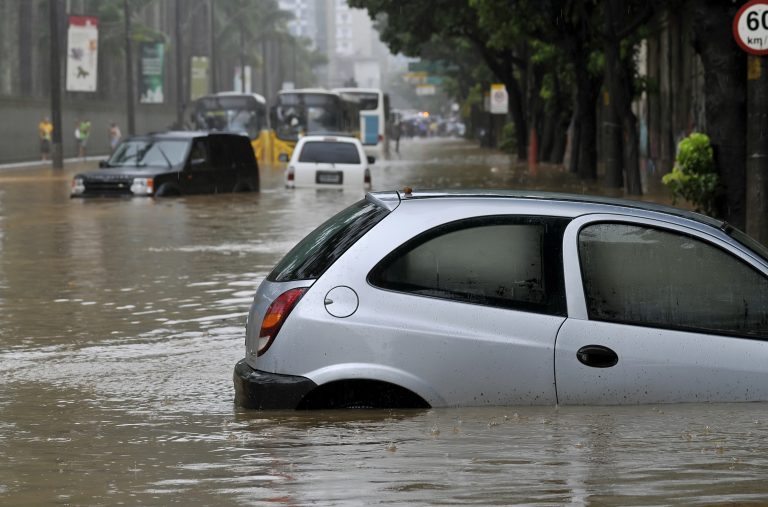
Warming temperatures are disrupting weather patterns and posing risks to all forms of life on Earth. These changes have created a fundamental need for public- and private-sector leaders to forge innovative, cost-effective strategies to harden key infrastructure -- including roads, bridges, mass transit and the electricity system -- and make vulnerable communities more resilient to coastal and riverine flooding.
Read More

Subnational Leadership

The Transatlantic Climate Alliance convenes public and private sector leaders to serve as Advisors on our Transatlantic Climate Council.

Subnational Leadership

The Transatlantic Climate Alliance convenes public and private sector leaders to serve as Advisors on our Transatlantic Climate Council, where they share and develop best practices designed to accelerate the adoption of clean energy, promote green jobs, and implement climate adaptation and mitigation measures at the subnational level.
Read More
Wind Turbines

Energy

Catalyzing the transition to a clean-energy economy.

Energy

Approximately eighty percent of the the worldʻs energy use comprises fossil fuels, and contributes more than three-quarters of climate-warming emissions. The good news is that the rapid growth and steadily declining costs of solar, wind, batteries, and other zero-emission energy technologies offer the potential to dramatically phase out the use of coal, oil, and natural gas in the coming years.
Read more
Sunset at Wild atlantic way

Oceans

Championing measures to reverse biodiversity loss, enhance climate resilience, and promote a sustainable ocean economy.

Oceans

They supply roughly half of the oxygen we breathe, serve as a key food source to more than three billion people, and support a ”blue” economy estimated to be worth more than $1.5 trillion a year. The World Bank asserts that healthy seas are critical to inclusiveness and poverty reduction, and are central to achieving the UNʻs 2030 Sustainable Development Goals.
Read More
Businesswoman waiting for public transport and drinking coffee

Transportation

Educating decisionmakers about the multifaceted benefits of zero-carbon mobility.

Transportation

the sector contributes roughly one quarter of global greenhouse gas emissions. The Transatlantic Climate Alliance highlights best practices in the transport sector to speed the transition to low-carbon options, including electric batteries and hydrogen fuel cells for passenger and freight vehicles, public transit, shipping, and aviation.
Read More
Aerial view of the combine harvester agriculture machine working on ripe wheat field.

Food and Agriculture

Advancing strategies to maximize carbon storage in soil and forests, restore degraded lands, and reduce food waste.

Food and Agriculture

Agrifood systems – including crop and livestock production, land-use change, food manufacturing, retail, consumption, and disposal – account for one-third of all global carbon emissions, according to the UN Food and Agriculture Organization.
Read More
TRANSATLANTIC CLIMATE ALLIANCE

Board of Directors

Marc R. Pacheco

Founding President and CEO

Rona Cohen

Deputy Treasurer and Director

Dr Lukas M. Stahl

Secretary Treasurer and Director

Dr. Josef Mantl, M.A.

Director

Richard Delaney

Director

Harmen Dekker

Director

JP Prendergast

Director

Ulrike Ziegler

Director

J. Brian Atwood

Advisory Board

Marc R. Pacheco

Founding President and CEO


Former Massachusetts Senator Marc R. Pacheco (3rd Bristol and Plymouth) served as Senate President Pro Tem and retired as Dean of the Massachusetts Senate in December 2024 after serving 36 years in the Massachusetts Legislature. During his tenure, Senator Pacheco held several key legislative roles, including:
Chair of the Senate Committee on Post Audit and Oversight; Senate Chair of the
Joint Committee on Emergency Preparedness & Management; Senate Vice
Chair of the Joint Committee on Telecommunications, Utilities, & Energy;
Founding Chair of the Standing Senate Committee on
Global Warming & Climate Change; Chair of the Joint Committee on Health Care; and Member of the Joint Committee on
State Administration and Regulatory Oversight. In addition, Senator Pacheco served as Co-Chair of the Legislative Caucus
on International Trade & Global Competitiveness, Founding Chair of the Council of
State Governments (CSG) U.S. State Legislative Climate Alliance, and Founding
Co-Chair of the Massachusetts Climate Alliance Legislative Caucus.

Senator Pacheco has served as Co-Chair of the CSG Smart Government Subcommittee for the National “Future of Work” Task Force; a member of the National Conference of State Legislatures (NCSL) National Task Force on Energy Supply; a member the CSG-East Territorial Relations Committee; and Co-Chair of the CSG-East Energy & Environment Committee, which serves 11 U.S. States, Puerto Rico, the U.S. Virgin Islands, and 5 Eastern Canadian provinces. Senator Pacheco was also appointed as Senate delegate for the Massachusetts-Québec Research Council, the New England Board of Higher Education, and the Massachusetts District Export Council – a federal appointment, where he served as Chair from 1996-2005. For his various international achievements, Senator Pacheco has received official commendations including “Commander of the Order of Prince Henry the Navigator” – the Republic of Portugal’s highest civilian award; “Grand Decoration of Honor in Gold with Star” – the Republic of Austria’s 4th highest decoration of merit; and the “Medalha Da Ordem De Timor-Leste”, honoring his lasting contributions to East Timorese independence. He has also received numerous honors from the labor, healthcare, and environmental advocacy communities, including the Audubon Society and the United Nations Youth & Student Association of Austria.

As a leading subnational policymaker on the issue of climate change, Senator Pacheco authored and sponsored the Global Warming Solutions Act of 2008, which established the first mandatory carbon emissions reductions requirements in Massachusetts history. He also sponsored legislation successfully adopted that established mandatory procurements for offshore wind, and in 2021 updated statewide emission reduction mandates to achieving 50% below 1990 levels by 2030, 75% by 2040, and Net Zero by 2050. Senator Pacheco is an Al Gore Climate Messenger, a long-time advocate of the urgency of climate change, and a
dedicated proponent of the transition to clean and renewable energy.

Rona Cohen

Deputy Treasurer and Director

Rona has extensive professional experience providing research and analysis on state-level climate and clean energy policy. For more than two decades, Rona ran the energy and environment program in the Eastern office of The Council of State Governments (CSG), and also served as the organization’s Director of Policy and Editor of Print and Multimedia Projects.

During her tenure at CSG, Rona provided policy analysis for Northeastern state government officials, organized regional climate summits, and led projects with state legislative leaders to catalyze clean energy development, promote resilience, and enhance the sustainability of the region’s communities and built environment. Earlier in her career, Rona worked as a newspaper, magazine, and wire-service reporter based in Buenos Aires, where she covered trade policy and the energy and agricultural commodities markets, and reported for media outlets including TIME Magazine, Knight Ridder/Bridge News, The Miami Herald, and People Magazine. Rona holds a B.A. in history from Wesleyan University and an M.A. in international economic policy from Columbia University.

Dr Lukas M. Stahl

Secretary Treasurer and Director
Dr Lukas M. Stahl is an Austrian-American attorney admitted to the State Bar of California, the U.S. Court of International Trade in New York and the U.S. Court of Appeals for the Federal Circuit in Washington, DC. He is licensed as a corporate and investment adviser pursuant to Austrian and European Law. Dr Stahl studied law, economics and business administration in Austria, Italy, United Kingdom and the United States and graduated with Master of Laws degrees from the University of Leicester in European Law and from the University at Buffalo Law School, SUNY, in U.S. Law. He also holds an MBA from the University of Chicago’s Booth School of Business and a post-graduate Certificate in Taxation from the Fordham Graduate School of Business. For his work Capital 2.0 – Capital Formation and Legal Risk in a New Global Economic Order From FIAT to EXIT he was awarded a PhD in Law from the University of Westminster in the United Kingdom. During the past 30 years he (co-)founded, managed or advised companies in Europe and the United States. Dr Stahl also serves on the board of two other non-profit foundations as president of the American Friends of the University of Leicester Inc. and as secretary general of the Global Center for Law of Finance Inc. Prior to founding his own law firm, Stahl Law, he helped build the European Practice of a leading securities law firm in Los Angeles and New York. Today, he manages Stahl Law out of Santa Monica, CA and New York, NY, and Upper East Side Ventures, NY, which invest into Emerging Growth Companies expanding their business in the United States.

Dr. Josef Mantl, M.A.

Secretary Treasurer and Director

Professional Experience

2009 – Present CEO JMC – Josef Mantl Communications GmbH

2002 –2009 Sole Proprietor Josef Mantl Advertising Agency

Academic Experience

2012Doctor of Jurisprudence, University of Vienna, Thesis: “Transparency and Communication of the European Union in the light of Article 15 TFEU”

2006 –2008 Master of Arts “Integrated Marketing Communications”, Emerson College of Communications, Boston (Fulbright Scholarship)

15th March 2002 Master of Law, University of Vienna

1998 Transfer to University of Vienna

1996 Study of law, Karl-Franzens University, Graz

3rd July 1995 Graduation with honors, Akademisches Gymnasium, Graz

Volunteering & Community Service

2013 – present “Climate Leader” Al Gore Climate Reality Project

2012 – present Deputy Head Institute “go governance – upgrading our democratic culture”

2007 – 2014 Spokesperson “Sustainable Future Campaign”

2004 – 2013 Vice President United Nations Youth and Student Association (Academic Forum for Foreign Affairs)

2003 – 2004 Chair “Peace and Culture” (European Economic Convention and Exhibition of Young Artists: Austria, Czech Republic, Hungary, Slovakia, and Slovenia)

1999 Participant “European Forum Alpbach”

1998 Volunteer National Council of Youth, Guatemala

Oct. 1995 – May 1996 Military service, First Reconnaissance Regiment, Graz

1996 State Chairman, Styrian Student’s Union

1993 – 1995 Federal Representative of the Austrian National Schools Students

1992 – 1995 High School Representative Akademisches Gymnasium Graz

Internships / International Activities

2008 – present Speaker at international conferences on communication, digital media and sustainability

2007 – 2016 Team Member with Hillary Clinton Presidential Campaign

2006 General Assembly World Federation of United Nations Associations, Buenos Aires, Argentina

2006 Visit of the UN Battalion with music group D-JMC, Kosovo

2005 Mother House (Mother Teresa Mission), Calcutta, India

2005 Model United Nations Conference, Harvard University, Boston, USA

2003 Visit of the UN Batallion at the Golan Heights with music group D-JMC, Syria

2002 Home of Peace (homeless shelter), Bulawayo, Zimbabwe

2001 AVL List Liaison Office – Marketing Department, Beijing, China

2001 Magna International (Frank Stronach) – Legal Department, Toronto, Canada

2000 Trade Commission of the Austrian Chamber of Commerce, New York, USA

1999 European Parliament, Brussels, Belgium

1999 Austrian Broadcasting Corporation, Vienna

1998 – 1999 Intern, Governor Waltraud Klasnic, Graz

1997 National Youth Council, Guatemala

1994/95/97 State Armory Guide, Graz

Language Skills

English 8 years at high school, final exam rating “excellent”, language trainings in Exeter, UK (1989, 1990, and 1992), New York (2000) and Boston (2007)

French 4 years of private lessons, language courses in Angers (1993), Dijon (1996 & 1999) and Paris (2004 and 2012), Erasmus semester at the “Université de Franche-Comte” in Besançon (2001)

Spanish 3 years high school, final exam rating “excellent”, language courses in Guatemala (1997), Malaga (1998), Granada (2000), Las Palmas (2012) and Palma (2013)

Latin 6 years at high school, final exam rating “excellent”, Silver Medal in the Latin translation contest (1995)

Ancient Greek 4 years at high school, final exam rating “excellent”, study travel to Greece (1993)

Publications (Editor)

2013 Communicating Sustainability – Perspectives in Politics, Economy and Society

2013 Dealing with Change – Austrians on the challenges of the 21st century

2013 Mobile Marketing from App to Z

2015 Transparency and Communication of the European Union

2016 I connect – how to network successfully

2020 Moving Forward – Topfit for the future

Awards

2013 Leopold Kunschak Science Price

2012 Named “European Young Leader” and participant for the international conference in Tblisi, Georgia by the German Atlantic Forum

2003 Federal Medal of Honor of the Republic of Austria by Foreign Minister Benita Ferrero-Waldner in honor of commitment to EU enlargement

1992 1st place at the Austria-wide essay contest on “The Future of Our Identity in the EU” sponsored by the newspaper “Die Presse” and Siemens Austria

Richard Delaney

Director

Richard F. Delaney is the President and CEO of the Center for Coastal Studies in Provincetown, MA.   Previously, Mr. Delaney was the founding Director of the Urban Harbors Institute at the University of Massachusetts Boston; served as Assistant Secretary of Environmental Affairs in Massachusetts for Governor Dukakis; was the National Chair of the Coastal States Organization in Washington DC representing the views of the 35 coastal states, Great Lake states and US territories and their Governors on legislative and budgetary matters before Congress.

Mr. Delaney has provided consultations to governments in over 20 countries, regarding coastal and ocean management, capacity building, institutional strengthening, and public education outreach campaigns; and as President of the Board of Directors for the Global Ocean Forum, he has helped organize Ocean Action Days at many United Nations climate conference including the Paris Climate Accord meeting in 2015.

He serves as chair for the Cape Cod National Seashore Advisory Commission; founding member of the Cape Cod Climate Change Collaborative; Board member of the Transatlantic Climate Alliance and past chair of the Cape Cod Chamber of Commerce’s Wastewater Task Force.

He has a B.S. degree in Political Science from Harvard,  completed graduate studies in environmental planning and landscape architecture at the State University of New York College of Environmental Sciences and Forestry and completed a Certificate Program for Senior Executives at J.F.K. School of Government at Harvard.

Harmen Dekker

Director

With 20 years’ experience in the sustainability sector in the field of water and sustainable biogas, I am a passionate and strategic leader devoted to the mitigation of climate change. As CEO of the EBA I give direction to the growth of the biogas sector in Europe as a sustainable pathway to decarbonise our gas need within a circular economy. In addition to my role at EBA I hold various positions in key organisations which are instrumental in the climate change and energy transition. As Vice-Chair of the United Nations ECE Gas Expert Group I collaborate with global gas experts on sustainable development on the topic of gas. In addition, I am governing Board Member of the BIP, a cooperation of the European Commission, Member States and value chain on biomethane, Director of the Transatlantic Climate Alliance which is a pending non-governmental organisation filing for the 501(c)3 status, and Advisory Board Member of Ghent University on the “End of Waste Programme”.

European Biogas Association – CEO, April 2020 – today

Giving direction and execution on an ambitious growth path for biogases in

Europe, decarbonising the gas sector and facilitate its role in the energy

system integration within a circular economy.

United Nations ECE – Vice Chair, March 2024 – today

The Group of Experts on Gas helps UNECE member States deliver on key

political commitments, such as the 2303 Agenda for Sustainable

Development and the Paris Agreement on Climate change

Transatlantic Climate Alliance – Director, Feb 2023 – today

The Transatlantic Climate Alliance is a pending non-governmental

organisation filing for 501(c)3 status that fosters subnational collaboration

to help leaders implement decarbonisation pathways, transition to a

sustainable future, and prevent the worst effect of our global climate crisis.

BIP – Governing Board Member, September 2023 – today

April 2020The BIP is public-private cooperation between the European

Commission, Member States and the Value & Supply chain to facilitate the

ambitious target on the biomethane production in Europe

University of Ghent – Advisory Board Member, End of Waste program, January 2022 – today

Isenburg Trust – Professional Moderator, January 2019 – today.

Professional moderator for international conferences and trade shows, specifically on renewables and energy transition.

DMT Environmental Technology – Strategic Market Developer, Strategic Market Developer MT, May 2015 – March 2020

Set up new business/financial models within the industry via scenario building and new technology scoping.

Board Member – Aqua Nederland, June 2012 – December 2013

Kalsbeek, Operations Director, July 2009 – January 2015

Renowned water consultancy company with a strong position in the health care and industrial market. Working in the “golden triangle” of industry, government, and technology its instrumental in the growth of the company in new markets and implementing new products and technology.

Education

Keele University, UK 2004 – 2005

BSC, Business Administration (part of IM&B)

Avans University, 1992-1996

JP Prendergast

Director

JP Prendergast, from county Mayo in the West of Ireland, with the University of Limerick, has contributed to numerous environmental panels, including those focused on integrating renewable energy for communities in Ireland and the EU. He is part of the Department of Chemical Sciences at the University of Limerick and serves as the co-author and project lead for zero-waste circular economy projects funded by the EU Interreg North-West Europe (NWE) program. His work emphasizes the integrated “Zero Waste” circular economy.

JP is also the founder of Community Power, a partnership of community energy groups committed to a sustainable energy future for Ireland. Community Power works with Irish communities to develop renewable energy projects, empowering people across the country to generate their own renewable energy—projects that are owned, operated, and controlled by the communities themselves. The mission of Community Power is to support Ireland in transitioning to clean, renewable energy while ensuring that communities have a real stake in and ownership of these projects.

Additionally, JP serves as the Chair of the Renewable Gas Forum Ireland (RGFI), where his roles include developing a focused roadmap for the RGFI, working with Brussels to shape green energy policy, and securing funding avenues for anaerobic digestion (AD) in Ireland and the EU. He is also a technical advisor to the European Biogas Association and a task force member of the European Commission’s Biomethane Partnership, collaborating with various groups to meet EU targets under REPowerEU.

Furthermore, JP is the founder and chair of the Claremorris and Western District Energy Co-Op, a sustainable energy community initiative in the West of Ireland. In this role, he oversees the co-operative and its members, raises funds for specific projects, and liaises with multiple communities throughout Ireland to establish energy co-operatives (SEC’s). He has successfully guided two community-owned solar projects for Claremorris and completed feasibility studies, detailed designs, and funding submissions for district heating in Claremorris.

JP Prendergast serves as a board member of the Irish Government’s RESS (SSG) Community Steering Board within the Department of Environment, Climate, and Communications, Ireland. In this role, he is responsible for policy development and support, collaborating with the CRU, SEAI, EirGrid, DECC.

He is also an External Trusted Advisor to the Sustainable Energy Authority of Ireland, where he provides support for the RESS (Renewable Electricity Support Scheme, Wind and Solar), specifically aiding communities in the development of renewable wind and solar projects.

JP serves as a member on the Board of Directors for the Transatlantic Climate Alliance in New York City. This organization is dedicated to advancing its charitable, educational, scientific, literary, and cultural mission in the field of climate action. Key deliverables include educating the public in the field of climate action with respect to (i) scientific research, (ii) law and finance and (iii) entrepreneurship and public private partnerships on the subnational level in the transatlantic region. The organization is committed to sharing best practices, accelerating the adoption of zero-carbon technologies, and conveneing climate allies and subnational leaders to catalyze climate mitigation and adaptation.

JP holds a Bachelor of Engineering from the University of Limerick, a Master of Business Administration from the University of Galway, and is currently pursuing a PhD at the University of Limerick.

Ulrike Ziegler

Director

Ulrike Ziegler is President of impact on sustainable aviation e.V., a non-profit association founded in early 2022 by leading financiers in aviation. impact, the largest sustainability-focused aviation industry association with 35+ members, aims to support and promote decarbonization strategies in aviation, i.a. through its unique Milestone Concept and mobilization of capital for decarbonization technologies.

Ulrike has more than 20 years aviation experience and held senior positions at UniCredit Bank as Global Head of Aircraft Finance and at ING Germany as Head of Aviation. She has worked with airlines and lessors around the globe at various stages of their business development. Keen to facilitate change she has spearheaded major strategic projects throughout her career.

Ulrike has served as member of the Investment Committee at HSH Global Aircraft I from 2007 through 2017. Prior to her aviation career she has worked in Project Finance, Export Finance and Syndications.

J. Brian Atwood

Advisor

J. Brian Atwood is a Senior Fellow and a member of the Board of Governors of the Watson Institute at Brown University. He was Dean of the University of Minnesota’s Humphrey Institute of Public Affairs from 2003 to 2010. Atwood served for six and one-half years as Administrator of the U.S. Agency for International Development (USAID) during the Clinton Administration.

In 1992/93 he led the Clinton transition team at the State Department and served as Under Secretary of State for Management prior to his appointment to head of USAID. He was elected Chair of the Development Assistance Committee of the OECD in 2010. During the Carter Administration Atwood served as Assistant Secretary of State for Congressional Relations.

He was President of the National Democratic Institute from 1985 to 1993, and served on the UN Secretary General’s Panel on Peace Operations in 2000. He joined the Foreign Service in 1966, and was Senator Tom Eagleton’s legislative advisor for foreign policy from 1972 to 1977. He was Dean of Professional Studies at the Foreign Service Institute in 1981–82. Atwood received the Secretary of State’s Distinguished Service Award in 1999.